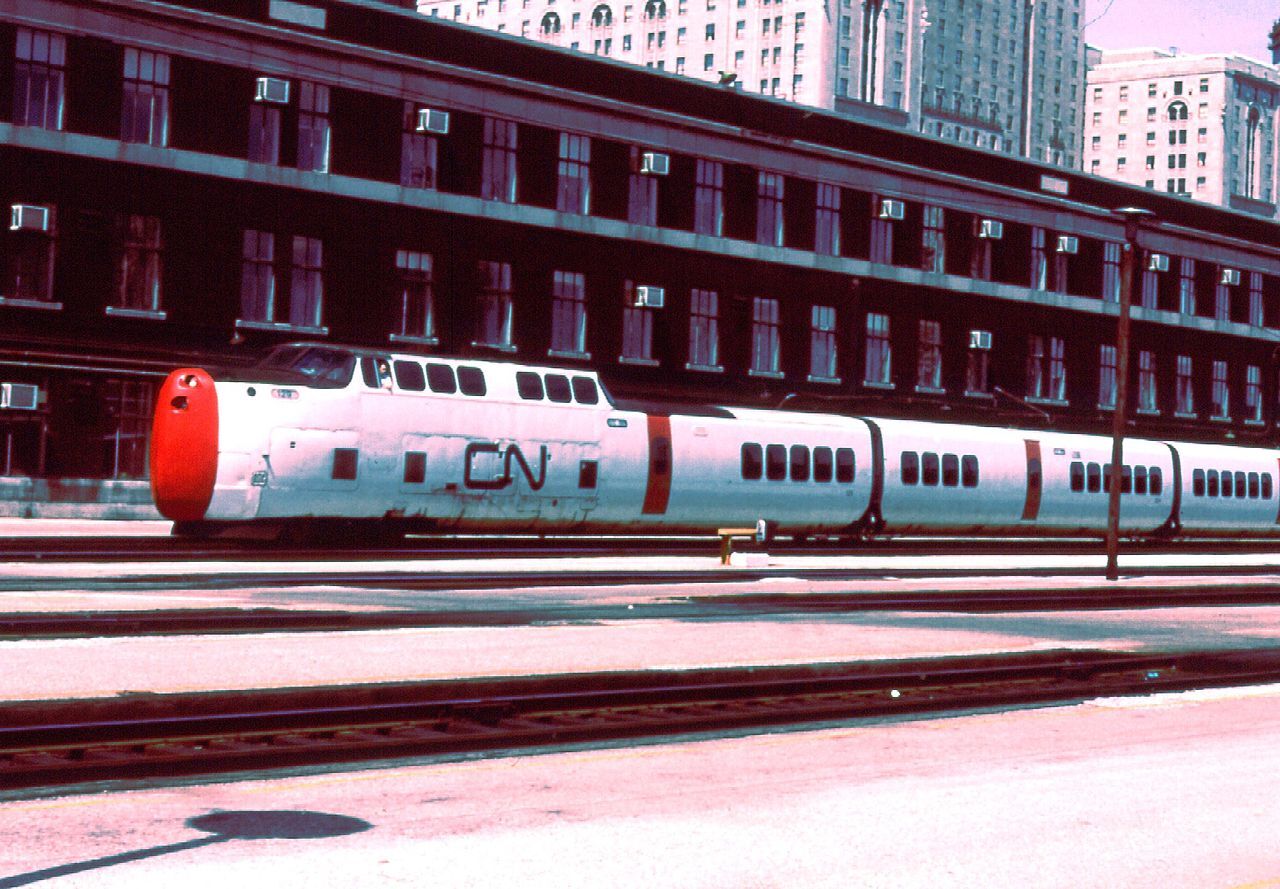
Alto High Speed Rail: The Wrong Project, in the Wrong Way, at the Wrong Time
The National Farmers Union (NFU) wants green, affordable, and reliable public transportation, and Alto isn’t it.
The NFU has a long history of advocacy for effective, long-term public transportation solutions, adopting multiple resolutions over the years that call for the expansion of inter-city and community public transit—particularly rail-based systems—thereby reducing car and air passengers, reducing greenhouse gas and carbon emissions, and delivering accessible, sustainable public transportation. Despite the marketing, Alto is none of those things.
That’s why Alto’s secretive, unaccountable and baseless High Speed Rail (HSR) project—to build a bullet train between Toronto and Quebec city—must be stopped quickly. Alto HSR was given a green-light in 2024 and added to the Major Projects Office’s list last year to “accelerate engineering, regulatory, and permitting work”—while parallel changes to the Expropriation Act will speed up the acquisition of properties for the new Right-of-Way for this HSR project.
This is a hasty, ill-considered commitment to billions of dollars of taxpayer funding per year over two generations to construct high speed rail with little supporting evidence or accountability. Alto HSR will mean significantly less funding for much-needed projects that would deliver real results, and long-term austerity for low-priority sectors. Too often agriculture is seen as low priority—as the short-sighted closure of agricultural farms and research stations in January showed us—pinching pennies today while throwing away a 30:1 return on investment that benefits farms, their communities, and the dwindling next generation of farmers.
The NFU, which includes many members who in theory support high speed rail, has seen strong member opposition to the Alto project. For members in its path, that opposition reasonably focuses on the fragmentation and expropriation of farms and farmland, the loss of livelihoods that have been built over generations, and potential impacts on the environment, waterways, local communities, emergency services, quality of life and property values. These are all important areas of concern for the NFU.
But it makes no sense to negotiate mitigation of the impacts of a project before a public determination and accounting of whether the project itself is viable and in the public interest. We have not had that public discussion—one of three significant problematic features of the Alto HSR project.
First, this is the least transparent mega-project in recent memory. Alto is wrapping up a “consultation” process without having released a feasibility study or business plan. Alto’s 2025 “Explanatory Document” was an embarrassing marketing brochure devoid of supporting evidence.
This is a cynical strategy from HSR proponents within the current administration and senior civil service, who are fully aware of the fact that, twice in the past (in 1995 and 2011), fully costed plans and feasibility estimates for HSR projects have been rejected because those numbers and plans made clear, to parliamentarians and the public, that HSR in this context would not deliver on its promises, and be a perpetual drain on our finances.
Second, leadership has embraced a public-private partnership model where Alto, a newly-minted Crown Corporation, is in full project partnership with Cadence, a “multinational group of companies” including Atkins-Réalis, formerly known as SNC Lavelin. Rather than offering discrete private contracts for specific pieces of work—with clearly-defined timelines and budgets—this model will severely limit public oversight and guarantee that, when the project goes over-budget, taxpayers will be the only party held accountable.
Third, successful HSR projects build from and rely on a strong foundation of existing, complementary public transportation infrastructure. We do not have that foundation. In the last 50 years conscious policy choices have chronically-underfunded urban public transportation systems in our major cities, privatized national railways, and defunded and decimated a once thriving public rail service. In the 1920s annual ridership peaked at 51 million, whereas today VIA Rail carries about 4 million.
In Canada’s major urban metropolitan areas, according to Statistics Canada, daily commuting remains dominated by cars—70% of commuters in Toronto and Montreal (78% in Ottawa), while less than 25% use public transit (12% in Ottawa!). Commuting via personal vehicle is much less common in Europe’s large metropolitan areas—44% of Parisians, 37% in Greater London, 33% in Germany.
Alto has projected impressive ridership numbers—and the reduced congestion and lower emissions that go with them—but European HSR projects achieving those numbers required pre-existing complementary rail and public transportation services that we do not possess. What we have now is underdeveloped (e.g. GO! O-Train, REM) or on the downhill slope of neglect (VIA). The majority of VIA rail passengers in the corridor travel less than 250km per trip, which holds true in similar European corridors even after they have HSR, where people regularly take short trips and only occasionally take the HSR.
HSR is a sleek, popular idea, but it cannot deliver its promise in a country that has starved its public transit system of resources for decades. The good news is that, due to underfunding, Major Projects targeting public transit would fairly quickly be transformative and have an order of magnitude greater impact than HSR on congestion and emissions reduction:
- Investment that shifts even 10% of daily commuters from personal vehicles to public transit;
- Investment developing short haul passenger rail services.
We have to start a mega-project of this scale and inter-generational impact with transparent decision-making, based on strong evidence that demonstrates how we are investing wisely in our common future. A democratic process will enable the most beneficial impacts: reducing inter-city car and air passengers; reducing GHG and carbon emissions; and delivering accessible, sustainable public transportation solutions that will benefit communities across the country. Alto HSR in its current form is none of those things. And committing to a 60-year project without proper foresight will rob from the next two generations the opportunity to deliver HSR in Canada—by building the wrong project in the wrong way, at the wrong time.
For more information, please contact:
- Phil Mount, Vice-President of Policy: vp-policy@nfu.ca
