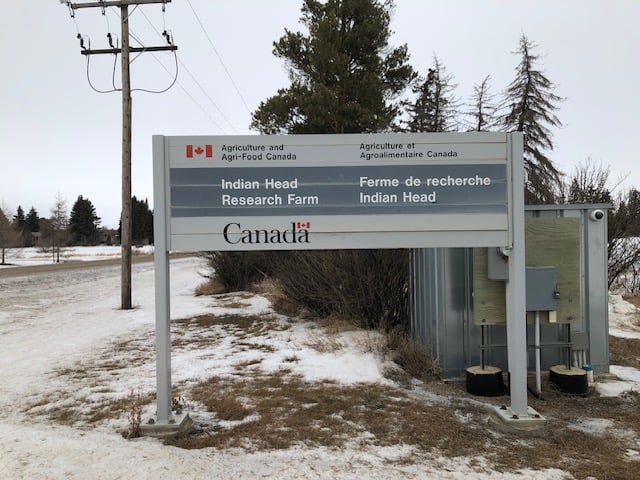
Seed Increase Unit at Indian Head Research Farm is essential for Canada’s seed sovereignty
To save a mere $27 million per year, Agriculture and Agri-Food Canada (AAFC) plans to close 7 public agriculture research facilities, including the Indian Head Research Farm in Saskatchewan, which has served Canadian farmers for 140 years. This research farm is ideally situated for plant breeding and seed production of many crops due its soils, climate, plant disease and pest population levels, and flat topography. The farm houses purpose-built facilities and equipment, and most importantly, its research lands have been carefully stewarded by generations of scientists and technicians.
Indian Head Research Farm is also where AAFC’s Seed Increase Unit (SIU) – a critical element of our pedigreed seed system – is located. The SIU maintains Breeder seed stocks for several hundred varieties of more than thirty crop kinds. These varieties of grain, pulse, oilseed, and forage crops are planted on more than 20 million acres across Canada.
All pedigreed seed can be traced back to the original seed of that variety registered by the plant breeder. Canada has five levels of pedigreed status – Breeder, Select, Foundation, Registered, and Certified – that indicate the number of generations removed from seed originally produced by a recognized plant breeder. Each level has standards for production, inspection, documentation and final quality that must be met in order to have its status officially recognized.
The SIU reproduces seed received from the plant breeders to maintain a secure supply of pure Breeder seed for the variety, and multiplies it to provide pedigreed seed growers with the seed needed to grow Certified seed, which they sell to farmers who grow commercial crops for sale. All of the Certified seed farmers buy to produce field crops can be traced back through the SIU to the original breeder of the variety.
The SIU has had a temporary stay of execution – AAFC is allowing it to continue operating for the remainder of the 2026 growing season. On July 16th, the federal government and the Government of Saskatchewan signed a Memorandum of Understanding to “explore potential approaches” to continue operations of both Indian Head and Scott Research Farms during their “planned disposal.” However, this agreement is non-binding and there has been no public announcement to indicate the continued operation of the SIU at Indian Head Research Farm beyond 2026.
AAFC is still talking about plans to “move” the SIU, some of it to irrigated land near Outlook, SK and the rest to a location near Saskatoon. Neither is as suitable for Breeder seed production as the Indian Head Research Farm. They lack the plotland and facilities to clean, organize, store and sanitize small seed lots under the proper conditions to maintain purity and germination potential. The soils and climate at Outlook and Saskatoon are different enough from Indian Head that growing seed lots on these lands will be less predictable, with more risk of failure and shortages.
The SIU plot land at Indian Head has been carefully managed for decades to eliminate weeds, especially noxious weeds, from the plots. Varieties are planted according to a strict rotation to prevent volunteer plants of different varieties or crop kinds from contaminating the seed lots. Seed is planted with purpose-built small plot seeders. The SIU building is specially designed and equipped to provide safe, clean and secure storage for the hundreds of seed lots of breeder seed for future SIU plantings and for distribution to pedigreed seed growers.
Canada’s multi-billion-dollar commodity grain sector depends on farmers having reliable access to high quality pedigreed seed every year. The SIU is a critical element of the pipeline that makes that possible.
Since announcing the cuts, AAFC has aggressively shut down public agriculture research capacity in spite of universal opposition from the farm organizations and against the Agriculture Committee’s unanimous recommendation to reverse the cuts
AAFC appears to be rigidly adhering to a reckless and ill-informed Cabinet directive. AAFC’s Deputy Minister Hanson told the House of Commons Agriculture Committee that all the funding cut decisions were “conducted under the process of cabinet confidences. We were not actively consulting in advance.”1 He also told the Committee that AAFC did not assess the costs of shutting down the centres, moving or replacing assets, nor ongoing losses due to eliminating vital capacity.
The government cut off debate in the final days of Parliament’s spring sitting to pass Bill C-30, which empowers Cabinet to override Pest Management Regulatory Agency (PMRA) bans on environmentally harmful pesticides, and to exempt any person (i.e. corporation) thing or activity from any law or regulation administered by the Canadian Food Inspection Agency – including the Seeds Act and Regulations. Cabinet’s track record of decision-making regarding the AAFC research capacity does not inspire confidence.
The SIU is the narrow passageway that links the decade or more of scientific endeavour to produce valuable new seed varieties with the farmers who grow billions of dollars worth of high-quality crops in challenging growing conditions every year. The Cabinet directive ordering AAFC to dismantle this essential, efficient, and necessary element of our seed system is impossible to view as a rational decision, unless the goal is, in fact, destruction of Canada’s capacity for seed sovereignty.
- Evidence, Standing Committee on Agriculture and Agri-Food, Meeting 22, 1st Session 45th Parliament, Tuesday, February 10, 2026. ↩︎
