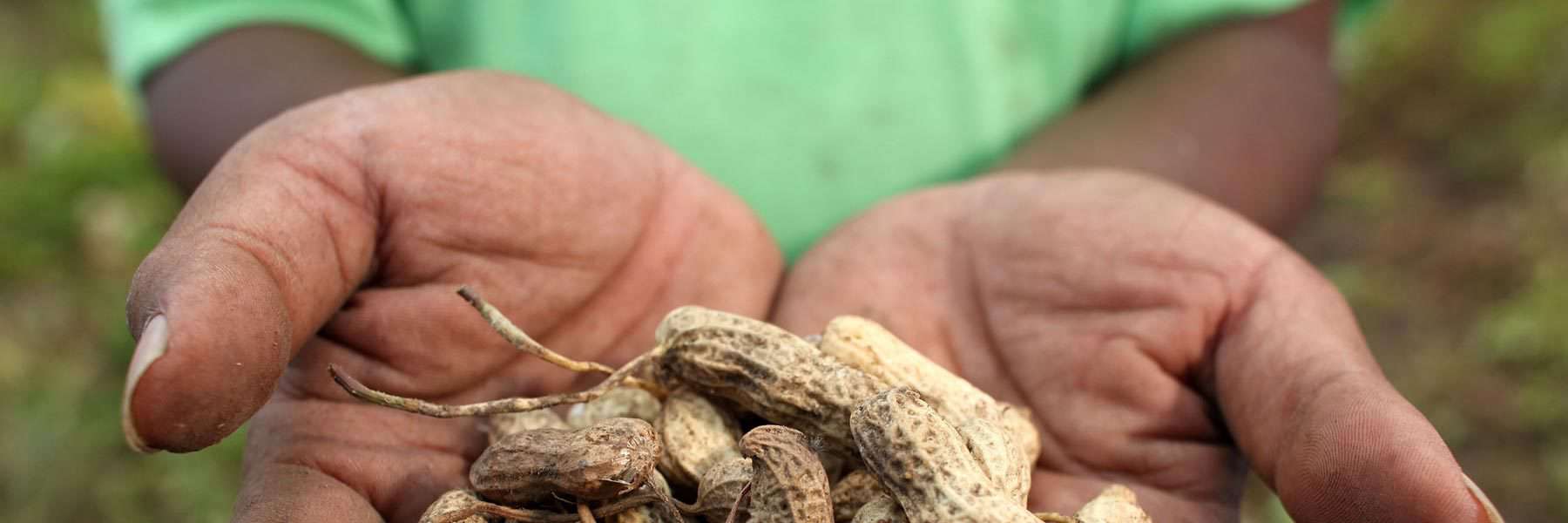
We plant life, they plant destruction
A Short Overview of the Destruction of Palestinian Agriculture, Fishing, and Food Production Capacity by the Israeli Regime in the Occupied Palestinian Territories
Palestinian farmer Gassan Abu Alia, a resident since birth in the village of al-Mgyayyer in the central Israeli occupied West Bank, has spent much of his life tending the grove of olive trees bequeathed to him by his father. Like many Palestinians, Alia and his family depend on the trees for their primary source of income.
In a single day in August 2025, 250 of the Alia family’s olive trees were bulldozed by the Israeli military. Some of the trees were hundreds of years old and represented not only a critical source of income but also a cherished ancestral legacy – a time-honoured inheritance, a sacred endowment, now reduced to a memory.
“My father cried at the window when he saw our ancestors’ trees being uprooted,” Alia told TRT World. “Many people [in our village] suffered shock, despair and depression.”
Tragically, stories of Israeli-instigated violence like Alia’s abound among Palestinian farmers and fisherfolk in the Occupied Palestinian Territory (OPT) – the West Bank, Gaza, and East Jerusalem. Alia is one of thousands of farmers and fisherfolk – men and women of the land and sea – who have suffered severe economic, material, and cultural losses and associated emotional stress from attacks on their farmland, crops, boats, seed stores, equipment, irrigation infrastructure, and water wells by the occupying Israeli regime.
The destruction of food systems in Palestine is not an isolated historical event. As discussed in the recent article, “From Palestine to Turtle Island: Food as a weapon of colonialism and tool of liberation,” published by Canadian Food Studies, it is “part of a broader attack on land sovereignty, reflecting similar patterns of colonial land theft and environmental devastation in North America.”1
Indeed, throughout modern history, food and food production capacity have often been deployed as weapons by colonial regimes to control and displace Indigenous populations.
“As a food systems expert, I know that forced starvation has been a tool of colonialism and warfare for many centuries,” said Tammara Soma, assistant professor at the School of Resource and Environmental Management at Simon Fraser University in Vancouver, Canada. “This is because of the simple truth that control over access to food means control over the population.”2
This imperial, colonial dynamic is an ongoing subject of concern for the National Farmers Union (NFU), including how it relates to Palestine. Members stress the importance of linking the imperial settler-colonial dynamic in Palestine to the same or similar dynamic operative elsewhere in the world, historically and currently, including in settler-colonial Canada.
The use of hunger as a weapon against Indigenous Peoples has a long history here in Canada, and we oppose it in the strongest possible terms,” said Wyanne Sandler, an NFU member who farms in Nalikitquniejk, Mi’kma’ki (Antigonish, Nova Scotia).3
“As food growers devoted to nourishing life, it is abhorrent to us to see Israel deliberately starving families in Palestine to force them off their land.”4
Sandler is also a member of the NFU’s Palestine Solidarity Working Group which has formulated policy responses to the genocide in Gaza in accordance with the NFU’s longstanding commitments to food sovereignty, human rights, and social justice.
Agriculture in Ancient Palestine
Since the days of ancient Palestine, agriculture has formed the foundational, subsistence-based economy and culture of the region. Ancient Jericho, located in the Jordan Valley in what is today the West Bank, is recognized as one of the world’s oldest agricultural settlements with cultivation dating to around 9000-8000 BCE.
Ancient Palestine encompassed a diverse landscape, from fertile coastal plains to arid deserts and highlands, and offered a favourable climate. Each region had its own challenges to and opportunities for farming. The Mediterranean Sea offered fisherfolk rich rewards for plying their maritime trade.
Palestinian agriculture began with the Neolithic Revolution, characterized by the transition from foraging to settled farming, and evolved through various periods including the Bronze Age, Iron Age, and the Roman/Byzantine eras which were defined by the cultivation of what has been called the “Mediterranean triad” – grains, grapes, and olives.
Before the 1948 Nakba (Arabic for “catastrophe”) when some 500 Palestinian villages were destroyed and some 750,000 Palestinians were expelled from their historical homeland, for purposes of forming the state of Israel, Palestinian agriculture was the backbone of the Palestinian economy. The sector was deeply rooted in traditional knowledge and characterized by subsistence-based farming (in Arabic, fellahin, meaning peasants) alongside growing commercial sectors like citrus exports.
In the 19th century, urban elites used Ottoman reforms to modernize, connecting local products to global markets via rail and improved ports. While Palestinian Arab farmers relied on traditional methods, Zionist settlements introduced more mechanization by the 1940s, including tractors, chemical fertilizers, and motorized boats for fishing, which in turn were integrated into Palestinian farming and fishing practices.
Wheat and barley dominated cultivation, accounting for some 75 percent of cultivated land, mostly for local consumption. Olive, vine, and citrus farming thrived in coastal areas especially. In addition to staple crops, Palestinian farmers practiced intensive agriculture on terraced hillsides and in coastal dune fields drawing on underground aquifers for irrigation.
Before the Nakba in 1948, Palestinian farming encompassed both localized subsistence crops and highly commercialized export operations. The sector was extensive and highly productive, covering over 2.99 million dunams (300,000 hectares). By 1945, Palestinian farmers were producing over 90 percent of the tobacco, 92 percent of the grain, 99 percent of the olives, and 95 percent of the melons grown in the region.
Since the 1948 Nakba, however, the destruction of Palestinian food systems and food production capacity has been a key tactic in Israel’s overall strategy to ethnically cleanse, to expel if not exterminate, the OPT of its Palestinian population.
October 7, 2023 and the Crucible of Genocide in Gaza
Following the democratic election of Hamas in 2007, Israel imposed a strict land, air, and sea blockade which followed the partial siege of Gaza it initiated in the 1990s. In international human rights circles, the blockade was characterized as rendering Gaza an “open-air prison.” The tightened siege severely limited the movement of people and goods, including access by farmers to their fields and fisherfolk to their fishing grounds. The ensuing long-term humanitarian crisis has been compounded by recent political and military developments.
The Israeli regime’s relentless oppression of Gazans and its long-term strategy of weaponizing food came into much sharper international focus beginning on October 7th, 2023. On that date armed Palestinian occupation resistance groups, led by Hamas,5 broke through the eastern Gaza-Israel border. The incursion led to the deaths of some 1200 Israelis and another 250 were taken hostage by Hamas.6
The Israeli regime stands accused of using the attack as a pretext to renew, accelerate, intensify, and broaden the ethnic cleansing of Gaza that it began in 1948 at Israel’s founding. It launched an extensive scorched-earth campaign using carpet bombing and other devastating military tactics which, at its most intensive, was prosecuted for more than two years. The killing of Gazan’s and destruction of their property has not ended – it has transitioned into more of a low-intensity campaign.
As I write, the official death toll as assessed by what is left of Gaza’s Health Ministry is 72,594 people, with 172,404 injured. And of course, many of those injured have suffered life-changing and in many cases life-threatening injuries. An unknown number of Gazans remain buried under rubble. Hundreds of thousands have been consigned to tent cities with inadequate access to food and clean water and where life-threatening diseases are increasingly rampant.
A UN independent commission of inquiry, the UN’s Special Rapporteur for the Occupied Palestinian Territories (Francesca Albanese), a raft of Israeli genocide scholars, and many international human rights organizations have concluded that Israel’s systematic attacks on Gaza constitute “genocide” under the UN Genocide Convention (1948), customary International Humanitarian Law, and International Human Rights Law.
The destruction of Gaza’s agricultural, fishing, and food production capacity became one of several concurrent fronts in the Israeli regime’s campaign to ethnically cleanse the enclave, the other fronts including intensive military attacks, forced displacement, and the systematic withholding of humanitarian food aid. The destruction and despoliation of farmland and interdiction of fishing practices throughout the OPT were taken to whole new levels.
The La Via Campesina organization in Palestine (LVC Palestine), a partner of the NFU, has denounced the Israeli government’s “deliberate assault on [Palestinians’] agricultural and fishing infrastructure.” It said the Israeli government’s weaponization of food threatens the starvation of millions of people and is also causing catastrophic environmental damage and will threaten the livelihoods of Palestinian farmers [and fisherfolk] far into the future.7
The Degradation and Destruction of Agriculture in Gaza
Before October 2023, Palestinian farmer Mohammed al-Slakhy and his family operated a 7.5-acre greenhouse complex in the Zeitoun area of Gaza City. They produced large quantities of vegetables including zucchinis, cucumbers, tomatoes, sweet peppers, and eggplants for commercial sale.
“I learned farming from my father and grandfather,” al-Slakhy told Al Jazeera. “Our farm used to produce abundant, high-quality crops for the local market and for export to the West Bank and abroad.
Sometime in 2024-2025, the Israeli military levelled the Al-Slakhy family’s greenhouse complex. Also destroyed was the farm’s entire irrigation network, all nine of its irrigation wells, two solar power systems, and two desalination plants.
“Everything we had has been destroyed…,”8 al-Slakhy said.
The al-Slakhy’s family’s farm losses are not an isolated event. They reflect the massive damage inflicted on the food production capacity and food sovereignty of the Palestinian people.
Before October 2023, Gazan agriculture made up 11 percent of the territory’s gross domestic product (roughly US$575 million) and 45 percent of its exports. Palestinian farmers in the region cultivated olive and citrus trees as well as grapes, guava, dates, palms, and figs. They grew more delicate fruits, vegetables, and flowers in high tunnels or other protective structures like greenhouses.9
Also, before October 2023, food production in Gaza supported over 560,000 producers through farming, fishing, and herding. “Gaza was not self-sufficient in foods, but [it] did produce [a] significant number of products,” said Dr. Mazin Qumsiyeh, a “biologist and social justice advocate at Bethlehem University in the West Bank.10
Within the agricultural sector, the olive sector has been hit hardest. Officials have documented that over 91,000 olive trees have been destroyed through uprooting, burning, and breaking and denial of access during harvest season. Other assaults on Palestinian agriculture in Gaza include the theft or killing of over 5000 sheep valued at about US$1.8 million. Beekeeping also has been targeted with losses of over US$154,000.
As of August 2025, reports from the UN and other organizations indicate that nearly all of Gaza’s fertile land is unavailable for farming, with 98.5 percent of cropland classified as unusable due to bombing, bulldozing, or seizure by the IDF within the “Yellow Line.” Following the October 2025 so-called ceasefire,11 the Israeli military established the Yellow Line to separate the Gaza Strip into two parts. Of the part of Gaza outside of Israeli control, only five percent remains suitable for cultivation.12
Agricultural consultant and food security expert Omran Al-Khasawneh told Al Jazeera that Israel’s intense bombardment has contaminated soils with such heavy metals as lead, mercury, copper, and chromium. The accumulation of these metals is toxic for plants. They hinder their roots’ ability to absorb essential nutrients thereby reducing crop productivity.13
The crisis is further exacerbated by the widespread destruction of agricultural infrastructure – over 1,100 wells and 450,000 linear meters of irrigation networks have been destroyed, along with approximately 12,500 greenhouses.14
Adding to this wanton destruction, Israel continues to block the entry of essential farming inputs including fertilizers, seeds, pesticides, and spare parts for agricultural machinery, severely hindering any efforts to restore agricultural production.
The Assault on Gaza’s Fishery Further Undermines Palestinian Food Sovereignty
On October 8, 2025 Ismail Farhat and another fisherperson set out from the shore of Deir al-Balah in central Gaza on a small punt he had built himself. A larger fishing boat he had owned had been destroyed in an Israeli bombardment. Shortly after leaving port, an Israeli naval vessel approached Farhat’s small craft and ordered him to “surrender.”
“They ordered us to remove our clothes, jump into the sea, and swim towards their vessel,” Farhat told Middle East Eye. “They began insulting and beating me … They told me I was Hamas and pretending to be a fisherman. Every time I raised my head or spoke a word, they beat me and insulted me with obscene language.”
Farhat was detained for two months in Sde Teiman, a notorious Israeli detention facility where Palestinian detainees are subjected to severe torture and forced to sit on their knees for long periods. “You live 24 hours a day with your hands cuffed. We were forbidden from speaking, forbidden from leaning to either side … We were not allowed a mattress. I slept on an iron mesh,” he added.
Farhat’s experience resembles that of hundreds of other Gazan fisherfolk who have been detained, imprisoned, tortured, even killed – their only crime: fishing the coastal waters as their ancestors did before them.
Historically, most Palestinian fishing has occurred in the southeastern Mediterranean Sea off the coast of the Gaza Strip, with fishing areas extending along Gaza’s 45-km coastline. The main port and the hub for most of Gaza’s fishing activity is in Gaza City.
The Israeli regime’s assault on the Palestinian fishery preceded the genocide. For decades, Israel had used a naval blockade to restrict the areas where Gazans are allowed to fish as a means of controlling commercial activity. But the permitted fishing zone has been sporadically reduced to three nautical miles or less, far below the 20 nautical miles agreed upon in the Oslo Accords.15
Since October 7, 2023, these disruptive measures have intensified. Israeli naval forces frequently open fire on fishing boats, chase them, and use drones to strike boats and shore landing sites. An estimated 232 fisherpersons have been killed in that time.16
According to the Food and Agriculture Organization of the United Nations (FAO), the intensified attacks since October 2023 have destroyed approximately 72-95 percent of Gaza’s fishing infrastructure and assets. Over 6,000 fisherpersons have lost their livelihoods, and the daily catch dropped to less than eight percent of previous levels. The Gazan fishery, once a major source of food and livelihood for Gazans, has been reduced to less than 10 percent of its pre-October 2023 levels.
The systematic destruction of Gaza’s agriculture, fishing, and food production capacity, together with continuous restrictions on humanitarian aid, poses a serious threat to the immediate and long-term food security needs of the Palestinian people. It has pushed much of Gaza’s population into famine-like conditions.17
Despite a US-brokered “ceasefire” signed by Hamas and the Israeli government in October, 2025 and the absence of reporting in mainstream media, the genocide in Gaza continues albeit in a less intensive manner. At the time of writing more than 800 Gazans have been killed and nearly 3000 injured since the signing of a “ceasefire” on October 10, 2025.18
Accelerated Annexation of Palestinian Land in the West Bank
The genocide in Gaza has drawn international attention away from the West Bank where Israel controls much of the agricultural land. Encroachments by Israeli settlers on Palestinian farmland, including croplands, often ignored or aided and abetted by the Israeli military, have escalated significantly since October, 2023 with legislated and de facto annexation.
The Palestinian Ministry of Agriculture reported $103 million in direct agricultural losses in the West Bank in 2025 due to intensifying settler violence and Israeli military restrictions. Major impacts include the destruction of over 91,900 olive trees, the theft or killing of thousands of livestock, and restricted access to land which has seriously disrupted the vital olive oil industry.
Settler expansion in the West Bank “will escalate the forced displacement of herding families, further restrict access to markets and land, and entrench the apartheid infrastructure that divides Palestinian communities from each other and from their sources of sustenance,” according to NFU partner, LVC Palestine.
Annexation of the West Bank, LVC Palestine has stated, directly undermines Palestinian food sovereignty by systematically stripping Palestinians of their right to control their own land, water, seeds, and agricultural production.19
annexation is directly linked to the genocide in Gaza. The connection is an overarching political strategy to secure “maximum territory with minimum population,” according to the UN Human Rights Council.
The Destruction of the “foundations of our agricultural life”
“For Palestinian agriculture, [Israel’s destruction of food production capacity] is a deliberate act of dispossession and fragmentation that will destroy critical farming zones, pasturelands, and water access routes, said LVC Palestine. It is “a continuation of the Israeli systematic campaign to eliminate the foundations of our agricultural life.”
The Israeli regime’s systematic assault on Palestinian food production capacity is a cornerstone of its settler-colonial strategy: to erase Palestinian rural presence, expropriate agricultural resources, and replace them with militarized settler enclosures. As farmers are cut off from their land, herders are pushed into shrinking and uninhabitable zones, and fisherfolk are denied or limited accessed to the sea, the Israeli destruction of Palestinian food systems accelerates. The Israeli regime knows that to control the land and the sea, it must uproot and destabilize the people who nourish and sustain the land and the fishery.
The Future of Palestinian Agriculture and Fishing in Palestine
At present, the future of Palestinian agriculture and fishing in Palestine is a matter of grim speculation. In Gaza, US President Donald Trump’s “Peace Plan for Gaza” and his “Board of Peace” are harbingers of a distressing dystopian reality – rebuilding Gaza into a glitzy, high-rise luxury seaside resort and playground for the world’s rich and powerful.
How would Palestinian farmers and fishers, those even allowed to remain in Gaza, fare in such a neo-settler-colonial setting? What might their lot be under such a system, other than servile? And does a similar vassal fate await Palestinians in an increasingly annexed and resettled West Bank?
Last November, citing Israel’s systematic destruction of Gaza’s agricultural infrastructure and the deliberate use of starvation as a weapon, NFUmembers passed a “landmark resolution” at their National Convention to join the global Boycott, Divestment, and Sanctions (BDS) movement “in solidarity with the Palestinian people’s struggle for freedom, justice, and equality.” The resolution recognizes and supports the right of the Palestinian people to achieve food security and sovereignty on their own terms and on their own land.
“Food sovereignty is a core value of the NFU,” said Hannah Dwyer, who farms on Sinixt, Ktunaxa, and Syilx land near Nelson, BC. “We support the right of all farmers – from Turtle Island to Palestine – to feed their families and communities in safety, dignity, and freedom.”20 And food sovereignty remains a crucial aspect of resistance for Palestinians and Indigenous peoples across the world.
The resolution also encourages NFU members to implement BDS strategies on their own farms. And it has strongly urged the federal government to impose diplomatic and economic sanctions on Israel, including a comprehensive (two-way) arms embargo. “The federal government must act immediately to sanction Israel, sever trade agreements, and stop supplying weapons to a state committing genocide,” Dwyer said.
Resistance is Never Futile
As I write, the US and Israeli war on Iran that began on February 28, 2026 – unprovoked and illegal under international law – threatens to engulf the entire Middle East region and plunge the world into economic chaos. The fallout is likely to compound the immiseration of Palestinians throughout the OPT.
But the resilience and determination among Palestinian farmers like Alia and Al-Slakhy and fisherfolk like Farhat, and indeed among all Palestinians, is legendary and celebrated and embodied in their continuous efforts to resist the occupation and Israel’s campaign to drive them from their ancestral lands and coastal waters.
Among Palestinian symbols of resistance to Israeli Zionist ambitions, the olive tree is considered the most powerful. According to TRT World, the destruction and uprooting of the ancient olive groves, such as those of West Bank farmer Alia, often function as both an ecological and symbolic trauma. Their loss can trigger profound grief, loss of heritage, and economic despair.
But “The olive tree is never just a tree,” Ajith Sunghay, head of the UN Human Rights Office in the OPT told Oxfam International in October 2025. “It is livelihood and lineage, resilience and economy, and a historic vein connecting Palestinians to the land.21
So rock-solid is the resolve of Palestinians that, according to the FAO, even Palestinians bombed out and displaced in Gaza are risking farming in the rubble or on small and often contaminated plots of land to provide something for their families.
As West Bank olive tree farmer Gassan Abu Alia says, referring to the Israeli occupiers, “We plant life. They plant destruction.”
As Palestinians, “we have always viewed planting as an irreplaceable part of our culture and identity,” said food security expert Omran Al-Khasawneh. “Despite the widespread destruction, we still believe in our ability to create something out of nothing – to show that, despite everything, we can still rise from the ashes and start anew, like a phoenix.”22
- “From Palestine to Turtle Island: Food as a weapon of colonialism and tool of liberation, “Sarah Rotz, Charles Z. Levkoe, Martha Stiegmanc, Mustafa Kocd, Indra Singhe, Max Ajlf, Yafa El Masrig, and Justin Podurh December 2024. ↩︎
- “Weaponization of food is a time-tested wartime strategy. We’re letting it happen again in Gaza,” AnalystNews, March 27, 2024. ↩︎
- “National Farmers Union calls for boycott and divestment campaigns to end Israel’s occupation of Palestine,” National Farmers Union, November 27, 2025. ↩︎
- Ibid. ↩︎
- Hamas, meaning “Islamic Resistance Movement,” is a Palestinian Sunni Islamist militant group and political organization that has governed the Gaza Strip since 2007. ↩︎
- A UN Commission of Inquiry found that the attacks represented violations of international humanitarian law and human rights law, amounting to war crimes and, in some instances, crimes against humanity. ↩︎
- “NFU Continues to Affirm the Rights of Palestinians, Calls for Lasting Ceasefire in Israel-Palestine,” Media Release, National Farmers Union, November 2025. ↩︎
- “Farmers in Gaza risk Israeli bullets to bring their fields back to life,” by Abdallah Al-Naami, 21 February 2026 UN Independent International Commission of Inquiry on the Occupied Palestinian Territory, including East Jerusalem, Al Jazeera. ↩︎
- 98 percent of Gaza’s Tree Cropland Destroyed During More than Two Years of Conflict, EOS, December 23, 2025. ↩︎
- “The American Geophysical Union Provides a Platform to Anti-Israel Themes,” Israel Academic Monitor, December 24, 2025. ↩︎
- The “Yellow Line” is a de facto military demarcation line separating the Gaza Strip into two parts following the October 2025 ceasefire. It represents a “creeping” buffer zone, often marked by yellow concrete blocks and soldiers, with Israel controlling the eastern 53-58 percent of the territory, while forcing Palestinians into a smaller, western zone. ↩︎
- “Israel’s war leaves just 5 percent of cropland usable in Gaza: UN,” TRT World, May 2025. ↩︎
- Ibid. ↩︎
- Ibid. ↩︎
- The Oslo Accords are a series of agreements signed between Israel and the Palestine Liberation Organization (PLO) between 1993 and 1999. They were supposed to result in a so-called “final status agreement” by 1999 that would “achieve a just, lasting and comprehensive peace” between Israelis and Palestinians. The objectives of the accords, including a two-state solution, have never been achieved. “Explainer: The Oslo Accords,” Institute for Middle East Understanding, September 1, 2023. ↩︎
- “Israel kills at least 232 fishermen in Gaza since start of war on enclave, devastating sector,” The New Arab Staff, January 4, 2026. ↩︎
- “Global hunger report warns famine could return quickly to the Gaza Strip,” Al Jazeera, April 2026. ↩︎
- Channel 4 News, March 20, 2026. https://www.youtube.com/shorts/oo17bLG8aF8 ↩︎
- Food sovereignty, as defined by LVC Palestine, is the right of peoples like Palestinians to healthy and culturally appropriate food produced through ecologically sound methods, and their right to define their own food and agricultural systems. ↩︎
- “National Farmers Union calls for boycott and divestment campaigns to end Israel’s occupation of Palestine,” National Farmers Union, November 27, 2025. ↩︎
- “The Olive Tree is Our Resistance,” by Abbas Melhem, Oxfam International, October 2025. ↩︎
- “Palestinians in Gaza Want to Rebuild Food Systems. Israel Isn’t Letting Them,” by Shahad Ali, Truthout, April 26, 2025. ↩︎
